Sam Lange · 2 September 2026
Quaylab Marine Research has announced the deployment of its latest tidal monitoring array in the Bristol Channel. This initiative aims to provide high-resolution data on tidal flows and marine conditions in one of the UK's most dynamic coastal regions. The project enhances ongoing efforts to understand complex hydrodynamic processes in an area characterized by extreme tidal ranges.
Array Deployment and Technology
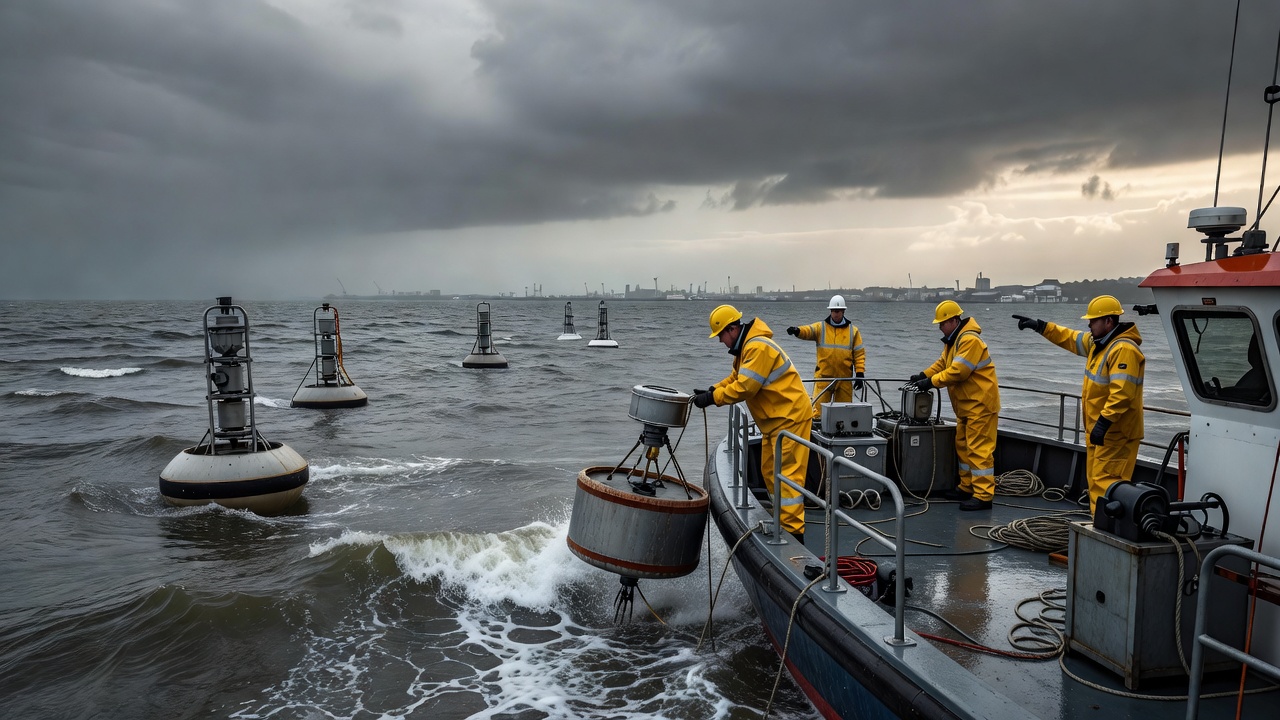
The array consists of multiple sensor buoys equipped with advanced acoustic Doppler current profilers and pressure sensors. These devices are positioned at strategic locations to capture comprehensive data on water velocity, depth variations, and temperature profiles. The technology allows for real-time transmission of information to onshore research facilities, enabling continuous monitoring without the need for frequent manual interventions. Engineers from Quaylab worked closely with local maritime authorities to ensure safe installation. The project involved specialized vessels to place the equipment in waters known for strong currents. Initial tests indicate that the array is functioning as expected, with data streams already being analyzed by the research team. Long-term data collection is expected to yield insights into seasonal variations and extreme weather events affecting the channel. The array's design incorporates robust materials to withstand harsh marine environments over extended periods.
Research Implications and Future Plans
This monitoring array will support studies on tidal energy potential, sediment transport, and the impact of climate change on coastal ecosystems. Researchers expect the data to contribute to better models for predicting storm surges and optimizing renewable energy installations in the area. Collaborations with universities and environmental agencies are planned to maximize the utility of the collected information. Quaylab intends to expand the network in the coming years, incorporating additional sensors for biological monitoring. The Bristol Channel project represents a significant step forward in marine research infrastructure. Funding for the project came from a combination of government grants and private sector partnerships focused on sustainable marine development. Quaylab continues to prioritize innovation in oceanographic instrumentation.