Gisela Krause · 2 September 2026
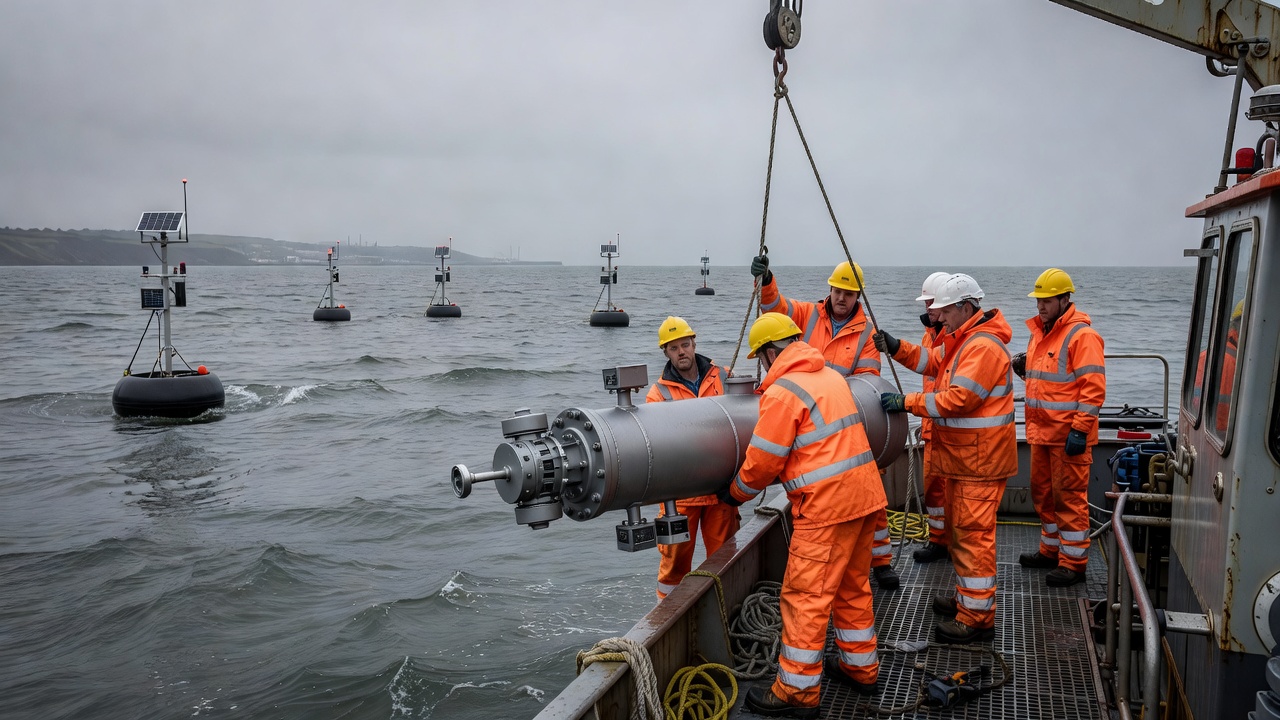
Quaylab Marine Research has successfully deployed its latest tidal monitoring array in the Bristol Channel. This initiative aims to enhance understanding of tidal patterns and support marine renewable energy projects in the region. The array includes high-precision sensors placed at strategic locations to capture comprehensive data on water movements and current dynamics.
Deployment Details
The deployment involved a team of marine technicians who positioned 12 sensor units at depths ranging from 20 to 50 meters. These units measure water velocity, temperature, salinity, and wave height in real time. Data is transmitted via satellite links directly to Quaylab headquarters for immediate analysis and storage. The project received funding from the UK Marine Science Council along with contributions from partner universities in Cardiff and Bristol. The Bristol Channel features some of the strongest tidal currents in Europe, making it an ideal testing ground. Historical data suggests the area could support tidal energy generation of more than 10 gigawatts if fully developed. This monitoring effort will run continuously for at least five years, providing a long-term dataset for scientists and policymakers. Additional sensors include acoustic doppler current profilers and pressure gauges that help in mapping the seabed interactions with tidal flows.
Research Objectives
Researchers at Quaylab plan to utilize the collected information to create more accurate models of tidal flows. Such models are essential for predicting environmental impacts and helping energy firms site their turbines effectively. Early measurements show average peak tidal speeds around 2.5 meters per second, with variations based on lunar cycles. International collaborations are underway to integrate this information into worldwide marine observation networks. The equipment is built to endure severe weather, including the frequent storms that affect the channel. Quarterly maintenance visits are scheduled, supported by advanced remote monitoring systems. Overall, this deployment represents a major step forward for marine research efforts across the United Kingdom and beyond. The findings are expected to inform future policy on marine protected areas and sustainable development along the Welsh and English coasts bordering the channel.